Summary: This article explores how AI literacy has become increasingly important for entrepreneurs, professionals, students, and curious learners as artificial intelligence continues to reshape business, creativity, and everyday life. Rather than presenting a single “best” book, the article organizes recommendations into practical categories, helping readers choose resources based on their goals; whether they want beginner-friendly explanations, technical depth, business strategy insights, or ethical perspectives.
Why Learning About AI Matters Today
Artificial Intelligence is rapidly becoming one of the most important technologies of the modern era. From smartphones and voice assistants to advanced business analytics and creative tools, AI is transforming how we live, work, and communicate.
Yet for many people, AI still feels confusing or intimidating. Terms like machine learning, neural networks, and generative AI can sound highly technical, making it difficult to know where to begin.
That’s why so many people search for the best books on AI. A well-written book can turn complex technology into something understandable and even exciting. Instead of scattered information across dozens of websites, books provide a structured learning path that gradually builds your knowledge.
In this ultimate guide, we’ll explore some of the best books on AI available today, explain how they can help beginners understand artificial intelligence, and show you how to choose the right AI book based on your goals.
Whether you’re a curious learner, entrepreneur, student, or professional, the best books on AI can help you gain the knowledge and confidence needed to navigate the future of technology.
What Are the Best Books on AI?
The best books on AI explain artificial intelligence clearly, with real-world examples of how it works and why it matters. These books often cover topics such as machine learning, neural networks, automation, and the future of AI technology.
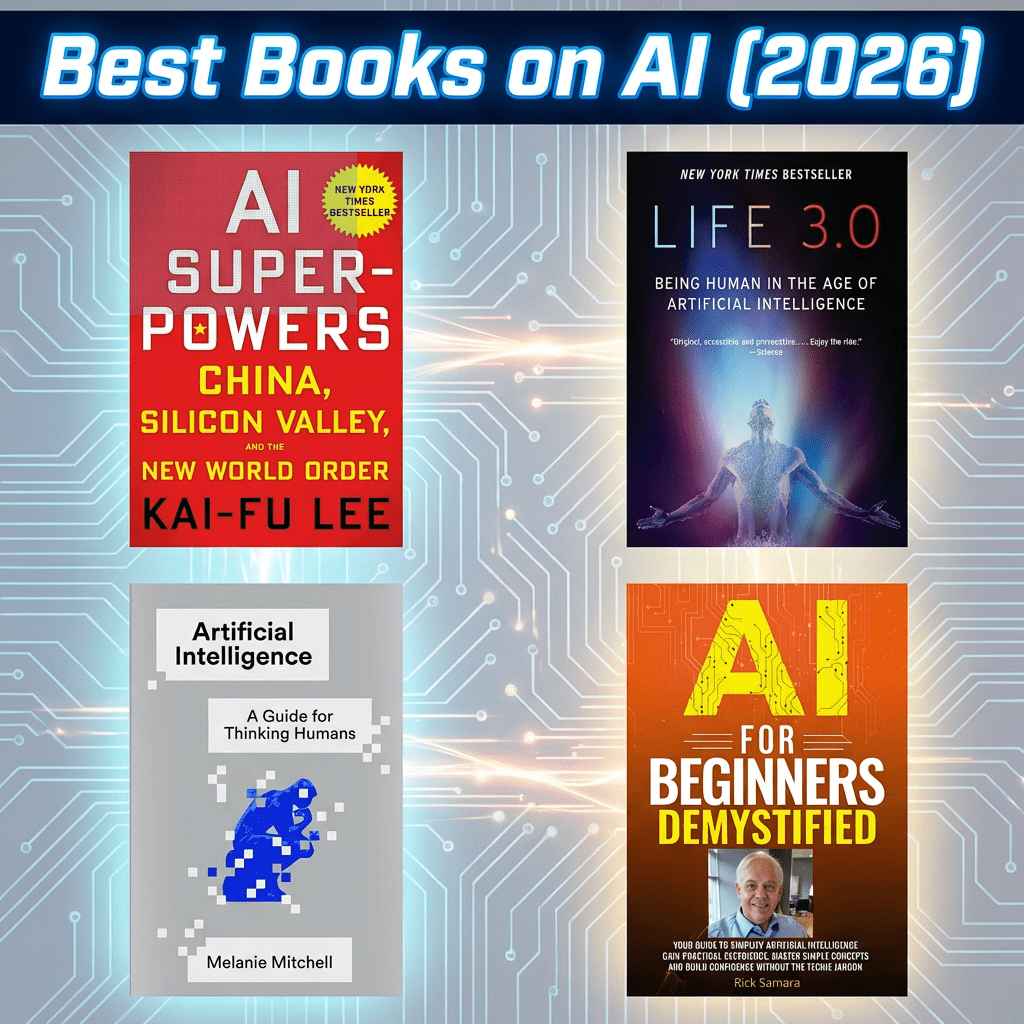
Some of the most recommended AI books include:
Each of these titles offers a different perspective on artificial intelligence, making them valuable resources for readers who want to understand both the technology and its broader impact.
Why Books Are Still the Best Way to Learn AI
In a world full of YouTube videos and online tutorials, you might wonder why books remain such a powerful learning tool.
The answer is simple: depth and clarity.
The best books on AI provide structured explanations that guide readers step by step through complex topics. Instead of jumping between fragmented pieces of information, readers can follow a logical progression from basic concepts to more advanced ideas.
Books also allow authors to share personal experiences, stories, and examples that make technical ideas easier to understand.
For example, many AI books explain machine learning using everyday analogies. One common comparison is teaching someone to cook: instead of giving strict instructions, you allow them to experiment and learn from experience. Over time, they recognize patterns and improve their results—much as machine learning algorithms do through data and feedback.
This storytelling approach is one of the reasons the best books on AI are so effective for beginners.
What Makes a Book One of the Best Books on AI?
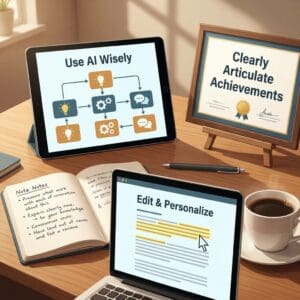 Not all AI books are created equal. Some focus heavily on mathematics and programming, while others explore the societal impact of AI.
The best books on AI typically include several key qualities.
Clear Explanations
Artificial intelligence is built on complex mathematical concepts. However, the best authors explain these ideas using simple language and relatable examples.
Readers should be able to understand terms like machine learning and neural networks without needing a background in computer science.
Real-World Applications
The best books on AI connect theory with real-world use cases. Readers learn how AI is used in everyday tools such as voice assistants, recommendation systems, and marketing platforms.
Understanding these applications helps readers see how AI can benefit their careers and businesses.
Engaging Storytelling
Technical topics can become dry quickly. Many of the best books on AI include personal anecdotes, humor, and relatable experiences that keep readers engaged.
Storytelling transforms AI from a complicated technology into an accessible learning experience.
Practical Insights
Readers should finish the book with actionable knowledge they can apply in their lives or careers. Whether it’s understanding AI tools or recognizing new opportunities, practical insights make AI learning valuable.
AI for Beginners Demystified – Rick Samara
Among the best books on AI for beginners, AI for Beginners Demystified by Rick Samara stands out for its friendly and approachable style.
Instead of presenting artificial intelligence as a complicated technical subject, the book focuses on making AI understandable for everyday readers. Samara uses humor, storytelling, and real-life examples to explain how artificial intelligence works and why it matters.
Readers learn about topics such as machine learning, neural networks, and generative AI in simple language. The book also highlights how AI already appears in everyday technology—from voice assistants and smartphone apps to online shopping recommendations.
One of the most unique aspects of the book is the author’s personal journey into AI. While running his digital marketing company, Samara began exploring AI tools designed to improve productivity and customer engagement. His curiosity about the technology led him to study AI more deeply and eventually write a book to help others understand it.
The result is a guide that feels less like a technical manual and more like a conversation with a knowledgeable friend.
Readers appreciate the book because it:
-
- Explains AI concepts without technical jargon
-
- Uses humor to make learning enjoyable
-
- Provides real-world examples of AI applications
-
- Encourages readers to explore AI with confidence
For anyone starting their journey into artificial intelligence, this title consistently ranks among the best books on AI.
Artificial Intelligence: A Guide for Thinking Humans – Melanie Mitchell
Another widely recommended entry among the best books on AI is Artificial Intelligence: A Guide for Thinking Humans by Melanie Mitchell.
Mitchell takes a thoughtful approach to explaining AI, focusing not only on what the technology can do but also on its limitations.
The book provides a historical overview of artificial intelligence, showing how researchers have attempted to replicate human intelligence through machines. It also explains why certain tasks that seem simple to humans—such as understanding context or recognizing subtle patterns—remain challenging for AI systems.
This balanced perspective helps readers understand that while AI is powerful, it is not a magical solution to every problem.
For readers who want a deeper understanding of how AI research works, this book is frequently included among the best books on AI.
Life 3.0: Being Human in the Age of Artificial Intelligence – Max Tegmark
Max Tegmark’s Life 3.0 explores one of the most fascinating aspects of AI: its potential impact on humanity’s future.
Rather than focusing solely on technical explanations, Tegmark examines the broader consequences of advanced artificial intelligence. He discusses topics such as:
-
- The economic effects of automation
-
- Ethical challenges in AI development
-
- The possibility of superintelligent machines
-
- How society should prepare for AI-driven change
This forward-looking perspective makes Life 3.0 one of the best books on AI for readers interested in technology’s long-term implications.
AI Superpowers – Kai-Fu Lee
Another influential title among the best books on AI is AI Superpowers by Kai-Fu Lee.
Lee is a renowned AI expert who has worked extensively in both the United States and China. His book focuses on the global competition between these two nations to lead the AI revolution.
Through personal stories and industry insights, Lee explains how AI is transforming industries, creating new opportunities, and reshaping the global economy.
The book also explores how AI innovation is being driven by massive amounts of data and rapid technological progress.
For readers interested in the business and economic impact of AI, this book is widely considered one of the best books on AI available.
How the Best Books on AI Help Beginners
The rapid growth of AI technology has created both excitement and uncertainty. Many people want to learn about artificial intelligence but feel overwhelmed by the technical terminology.
The best books on AI help beginners overcome this challenge by providing clear explanations and practical examples.
Here are some of the ways these books benefit readers.
Building Foundational Knowledge
The best books on AI introduce readers to fundamental concepts such as machine learning, neural networks, and data training.
Understanding these ideas provides a strong foundation for exploring more advanced AI topics.
Understanding Everyday AI
Many people don’t realize how frequently they interact with AI technology. From recommendation algorithms to smart assistants, AI is already integrated into daily life.
The best books on AI highlight these examples, helping readers see how artificial intelligence affects the world around them.
Reducing Fear of Automation
One of the biggest concerns about AI is intimidation and the fear that machines will replace human workers.
Many authors address this issue directly, explaining that AI often creates new opportunities while transforming existing roles. Learning about AI helps readers adapt and stay competitive in an evolving job market.
Encouraging Exploration
After reading the best books on AI, many people feel inspired to experiment with AI tools themselves.
This hands-on exploration can lead to new skills, creative projects, or innovative business ideas.
Choosing the Right AI Book for Your Goals
Because artificial intelligence is such a broad field, the best books on AI often focus on different aspects of the technology.
When choosing a book, consider what you want to learn.
For Beginners
Look for books that explain AI concepts in simple language and provide real-world examples.
For Business Professionals
Choose books that focus on AI applications in marketing, automation, and data analysis.
For Future Thinkers
Books exploring the long-term impact of AI on society and the economy may be most appealing.
For Technical Learners
Some readers may prefer books that dive deeper into algorithms and programming concepts.
The Future of AI and Why Learning Now Matters
Artificial Intelligence is still evolving rapidly. New breakthroughs in machine learning and generative AI continue to expand what these systems can do.
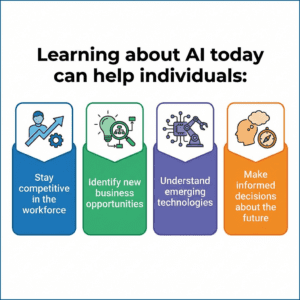 As AI technology becomes more integrated into everyday life, understanding its basics will become increasingly valuable.
Learning about AI today can help individuals:
-
- Stay competitive in the workforce
-
- Identify new business opportunities
-
- Understand emerging technologies
-
- Make informed decisions about the future
The best books on AI provide an accessible starting point for anyone who wants to understand this transformative technology.
Final Thoughts: The Best Books on AI Can Change How You See Technology
Artificial Intelligence is shaping the future of nearly every industry. While the technology may seem complex at first, the best books on AI make it accessible, engaging, and even enjoyable to learn.
From beginner-friendly introductions to deep explorations of AI’s future, these books provide valuable insights that help readers move from confusion to confidence.
If you’re just starting your journey, AI for Beginners Demystified offers one of the most approachable introductions available today. By combining humor, storytelling, and clear explanations, it shows that understanding AI doesn’t require a computer science degree—only curiosity and a willingness to learn.
As artificial intelligence continues to transform the world, reading the best books on AI may be one of the smartest investments you can make in your future knowledge.
This has never been truer today. I say this because Generative AI has now taken firm root in this new technology. Simply put, Generative AI combines machine learning, neural networks, and deep learning, putting AI in the hands of everyone.
Think of Generative AI as a digital co-creator. It’s a tool that doesn’t just follow instructions; it collaborates with you to generate ideas, content, and solutions.
For this reason, I have updated this article with a new section at the bottom titled: What Are the Top Four Books on Generative AI?
Frequently Asked Questions:
Why should I read books about artificial intelligence?
Reading the best books on AI helps you understand how artificial intelligence works, how it affects businesses and jobs, and how you can use AI tools in everyday life. Books provide structured explanations that are often clearer than scattered online information.
Can beginners really understand AI from books?
Yes. Many of the best books on AI are written specifically for beginners. Authors use simple explanations, analogies, and stories to make complex concepts such as machine learning and neural networks easier to understand.
What topics do the best books on AI usually cover?
Most AI books explain topics such as:
-
Machine learning
-
Neural networks
-
Generative AI
-
AI in everyday applications
-
The future of work and automation
These topics help readers understand both the technology and its impact on society.
UPDATED SECTION (3/29/2026):
What Are the Top Four Books on Generative AI?
Want to go deeper? These four books are excellent next steps for someone moving from curious beginner to informed practitioner.
|
Book #1 — AI for Beginners Demystified By Rick Samara The starting point for anyone who wants to understand AI — including generative AI — without drowning in technical jargon. Rick uses humor, storytelling, and real-world examples drawn from his background as a U.S. Air Force Intelligence Analyst and marketing entrepreneur to make every concept feel approachable. Covers machine learning, neural networks, generative AI, large language models, and practical applications. The ideal first book before tackling the heavier reads on this list. |
|
Book #2 — The Age of Generative AI By Michael R. Bhaskar A compelling and well-researched look at how generative AI is reshaping creativity, work, and society. Bhaskar explores both the immense promise and the sobering implications of a world in which AI can generate on demand. Accessible to non-technical readers while still substantive enough to satisfy the analytically curious. Strong on the big-picture implications of generative AI for industries, culture, and the future of human creativity. |
|
Book #3 — Co-Intelligence: Living and Working with AI By Ethan Mollick Wharton professor Ethan Mollick brings practical wisdom and research-backed insights to one of the most important questions of our era: how do we work effectively alongside generative AI? This is not a doom-and-gloom tech book. It’s a thoughtful, optimistic, and actionable guide to treating AI as a collaborator — and getting dramatically better results as a result. Highly recommended for professionals at any level who want to use generative AI intelligently. |
|
Book #4 — Impromptu: Amplifying Our Humanity Through AI By Reid Hoffman with GPT-4 LinkedIn co-founder Reid Hoffman wrote this book in direct collaboration with GPT-4, making the book itself a demonstration of generative AI in action. It covers how generative AI will affect education, creativity, justice, and work — with Hoffman and the AI trading perspectives throughout. It’s thought-provoking, optimistic, and a genuinely unique reading experience. A great choice for professionals who want to understand the philosophical and societal dimensions of generative AI alongside the practical ones. |
About the Author
Rick Samara is an author, consultant, and AI strategist who helps businesses and creators understand how emerging AI technologies can improve communication, marketing, and productivity. With a focus on practical implementation, he specializes in translating complex AI concepts—such as multimodal systems, generative AI, and automation—into clear, actionable insights for everyday use. Drawing on experience in leadership, technology, and intelligence analysis, Rick’s work emphasizes responsible innovation, human-centered design, and helping organizations adapt confidently to the future of AI-driven content creation.
Further Reading
Brynjolfsson, E., & McAfee, A. (2014). The second machine age: Work, progress, and prosperity in a time of brilliant technologies. W.W. Norton & Company. https://wwnorton.com/books/the-second-machine-age/
Davenport, T. H., & Ronanki, R. (2018). Artificial intelligence for the real world. Harvard Business Review. https://hbr.org/2018/01/artificial-intelligence-for-the-real-world
Mollick, E. (2023). Using AI to work smarter. Harvard Business School Working Knowledge. https://hbswk.hbs.edu/
OpenAI. (2024). Prompt engineering best practices. https://platform.openai.com/docs/guides/prompt-engineering